
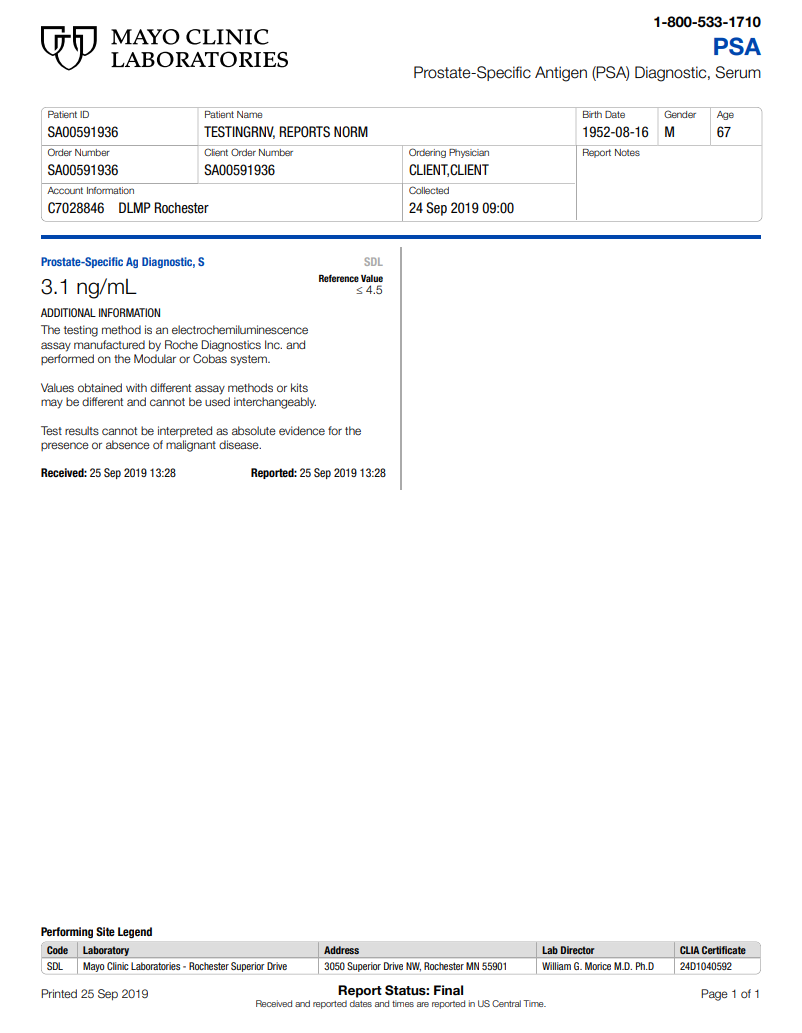
Prostate Specific Antigen
Prostate-Specific Antigen (PSA) is a protein produced by the prostate gland. This blood test measures PSA levels to help assess overall prostate health and screen for potential abnormalities.
PSA testing helps assess:
• Prostate health monitoring
• Elevated PSA levels
• Risk of prostate abnormalities
• Ongoing surveillance if previously elevated
Reference Range (General Adult Guidance)
Typically <4.0 ng/mL, though interpretation varies by age and individual risk factors.
What Your Results May Mean
• Lower PSA: Generally consistent with normal prostate activity.
• Elevated PSA: May be associated with benign enlargement (BPH), inflammation (prostatitis), or other prostate conditions. Further evaluation may be recommended depending on your overall clinical picture.