D Dimer
The D-Dimer test measures the level of D-dimer fragments in the blood. D-dimer is produced when a blood clot dissolves in the body, making it a useful marker for identifying abnormal clot formation and breakdown. Elevated levels can indicate that the body is actively forming and degrading clots.
This test is commonly used to help evaluate conditions related to abnormal blood clotting, including deep vein thrombosis (DVT), pulmonary embolism (PE), and other clotting disorders. It may also be used alongside clinical evaluation when symptoms such as leg swelling, chest pain, or shortness of breath suggest a possible clot.
D-Dimer testing helps assess:
• Possible blood clots such as DVT or pulmonary embolism
• Abnormal clotting activity in the body
• Evaluation of unexplained swelling or chest symptoms
• Monitoring of certain clotting or inflammatory conditions
Reference Range (General Guidance)
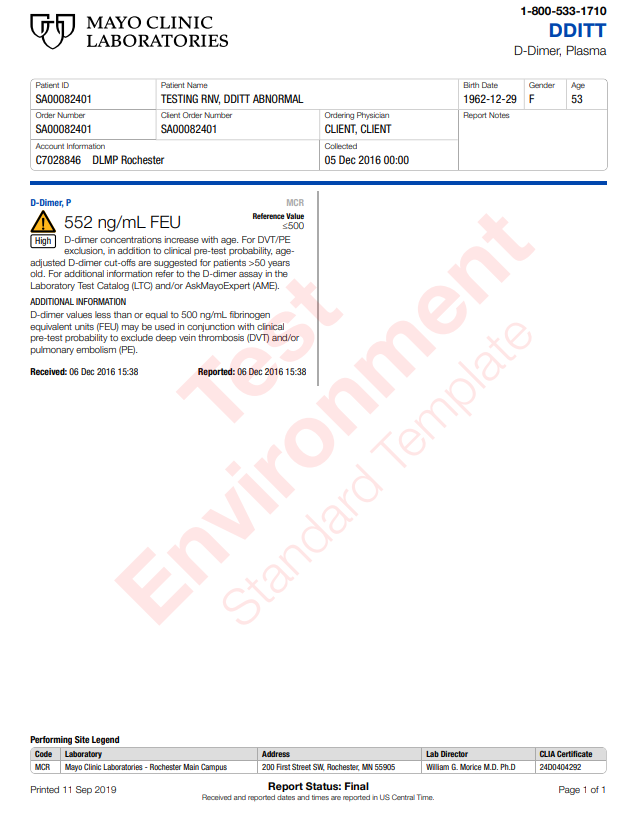
Typically <0.50 µg/mL FEU (may vary slightly by laboratory).
What Your Results May Mean
• Elevated D-Dimer: May suggest active clot formation and breakdown. This can occur with conditions such as deep vein thrombosis, pulmonary embolism, recent surgery, trauma, infection, inflammation, or pregnancy. Further medical evaluation may be required.
• Within Range: Low levels make significant active clot formation less likely.
D-Dimer results are usually interpreted alongside symptoms, clinical history, and other diagnostic tests for a complete evaluation.