

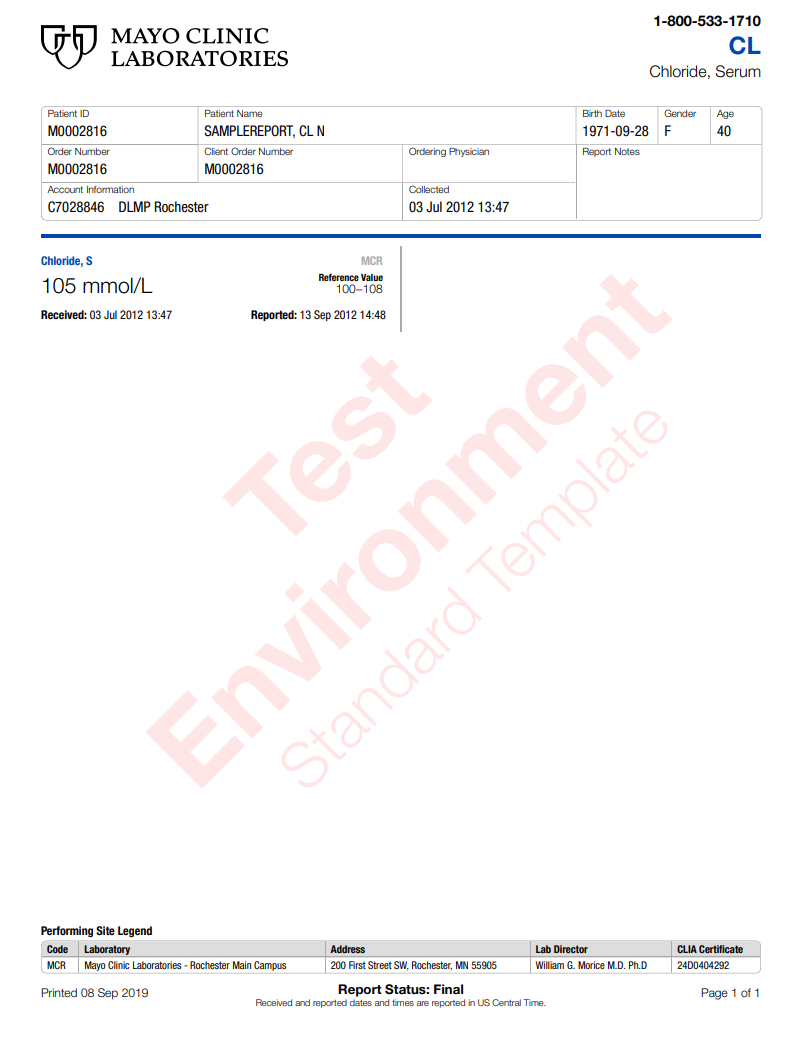
Chloride
The chloride test measures the level of chloride in the blood, an essential electrolyte that works closely with sodium and potassium to maintain fluid balance, blood pressure, and acid-base (pH) regulation in the body.
Chloride plays a key role in maintaining proper hydration and is also involved in digestive function through its role in stomach acid (hydrochloric acid) production.
What the Test Covers
• Serum chloride level (mmol/L) – evaluates electrolyte balance and acid-base status
Why Consider Chloride Testing
• Assesses hydration status and electrolyte balance
• Helps evaluate kidney function
• Supports assessment of acid-base imbalances (metabolic acidosis/alkalosis)
• Useful in monitoring dehydration, overhydration, or electrolyte disturbances
• Often included as part of a basic or comprehensive metabolic panel
Reference Range (Adult)
• Chloride: ~98–107 mmol/L
(Ranges may vary slightly by laboratory.)
What Your Results May Mean
• High Chloride (Hyperchloremia): May be associated with dehydration, kidney dysfunction, metabolic acidosis, or excessive salt intake
• Low Chloride (Hypochloremia): May indicate vomiting, dehydration, metabolic alkalosis, or certain hormonal imbalances
• Within Range: Suggests normal fluid and electrolyte balance
Chloride levels are best interpreted alongside other electrolytes (sodium, potassium, bicarbonate) to provide a complete picture of hydration status and metabolic health.